Luxury Hotel Compare may earn a commission from bookings through some links, at no extra cost to the traveller. Official site links are not sponsored. How rankings and funding work.
HomeTravel guidesHotel review, Tokyo
HOSHINOYA Tokyo Review 2026: Is Tokyo's Skyscraper Ryokan Worth the Price?
A ryokan stacked 17 floors high in Otemachi: the rooms worth booking, the rooftop onsen, what it really costs by season, and how it compares with Aman Tokyo and Janu.
By Jack Williamson, the LHC house pen nameHow we workUpdated 23 October 202616 minute readRates checked 23 October 2026
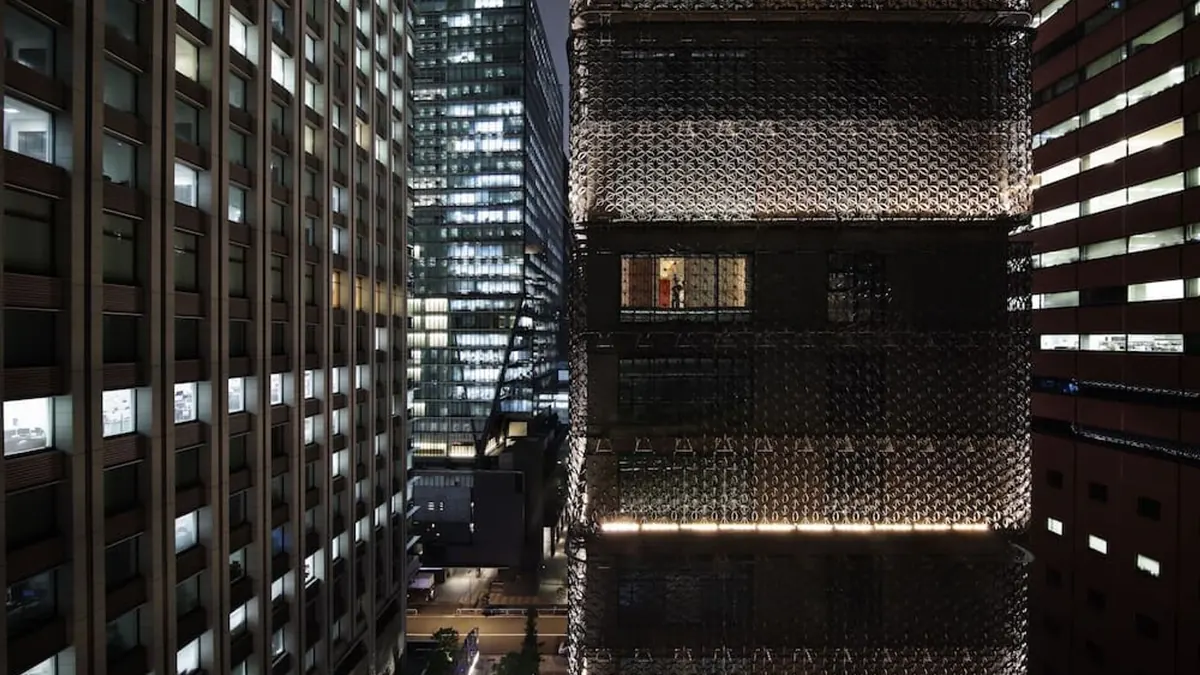
In this photo: HOSHINOYA Tokyo, Otemachi
Rates and policies checked 23 October 2026 and cited at the end of the page. Prices move daily, so check live rates before booking.
The short answer
HOSHINOYA Tokyo is worth it for one type of traveller: the couple or solo guest who wants a genuine ryokan experience, with tatami floors, a rooftop hot spring and shoes off at the door, without leaving central Tokyo. For that guest it is the only hotel of its kind in the city. For a family who wants a pool and a kids club, or a points collector who expects breakfast credits and a late checkout, it is a poor fit and an expensive one.
Expect to pay roughly US$500 to US$830 per night for two in a 41 to 45 square metre Yuri or Sakura room in January and about US$700 in August, the cheapest month, rising to US$1,000 to US$1,300 in February, cherry blossom, October and autumn foliage weeks. Google Hotels showed US$507 on Priceline for 8 to 10 January 2027, while Hotels.com showed £959 (about US$1,280) for 16 to 17 November 2026. Dinner in the main dining room costs ¥28,000 per person before tax and service, and breakfast costs ¥5,000. Those extras matter because very little is included in the room rate beyond the onsen, the floor lounge snacks and the nightly sake tasting.
What HOSHINOYA Tokyo is actually like
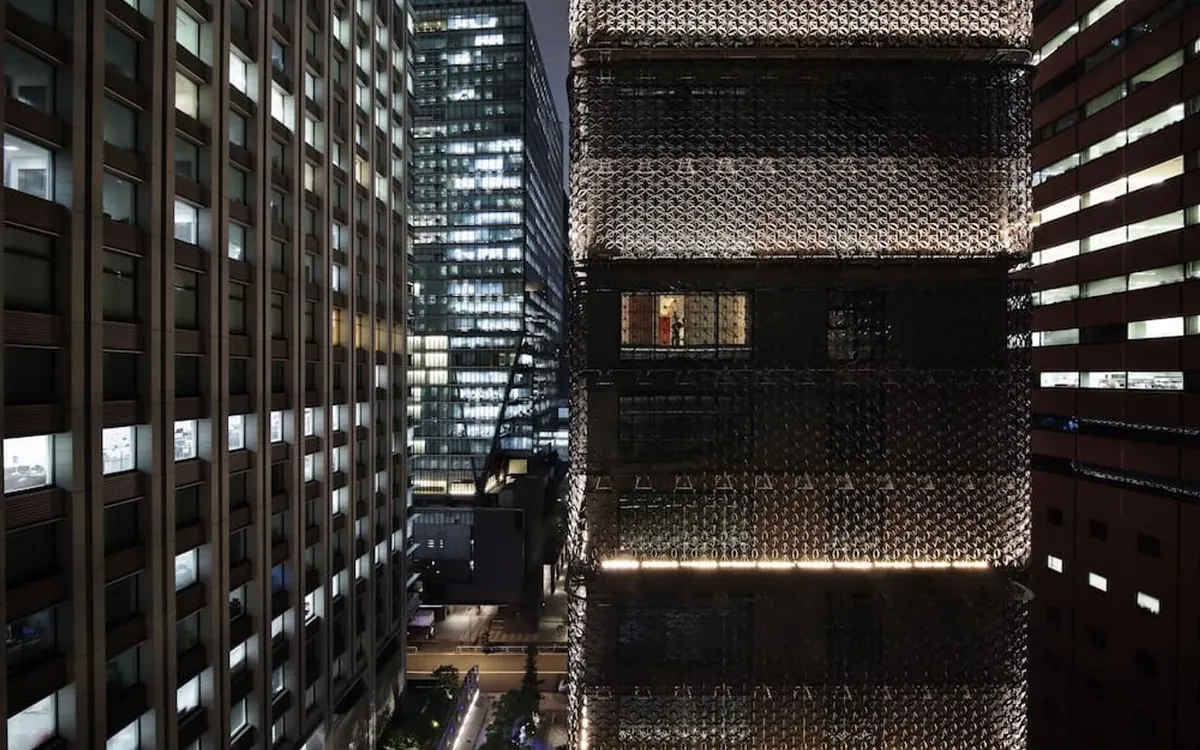
The story that sells this hotel is "a ryokan in a skyscraper", and for once the marketing line is accurate. Hoshino Resorts opened HOSHINOYA Tokyo on 20 July 2016 at 1-9-1 Otemachi, a 17 storey tower with two basement levels in the financial district beside the Imperial Palace moat. It was the brand's fifth HOSHINOYA property and the first in a city centre. Guest rooms occupy 14 floors, the hot spring sits on the 17th floor, and the restaurants are in the first basement.
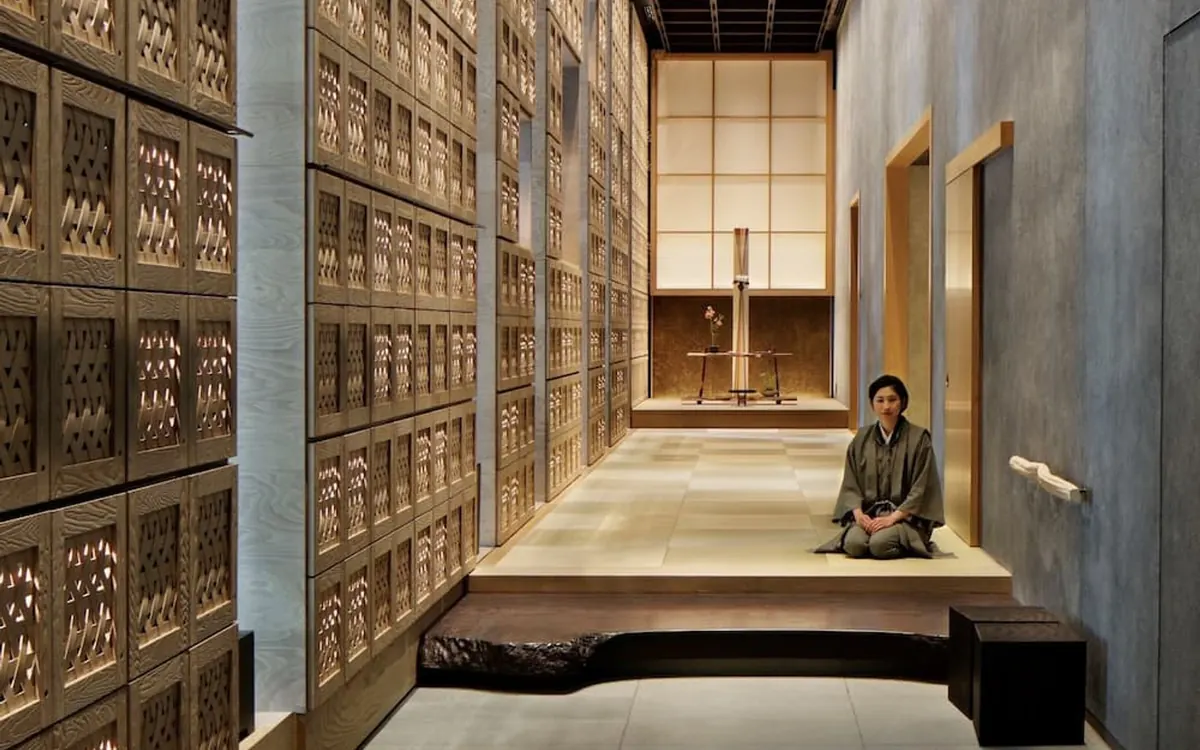
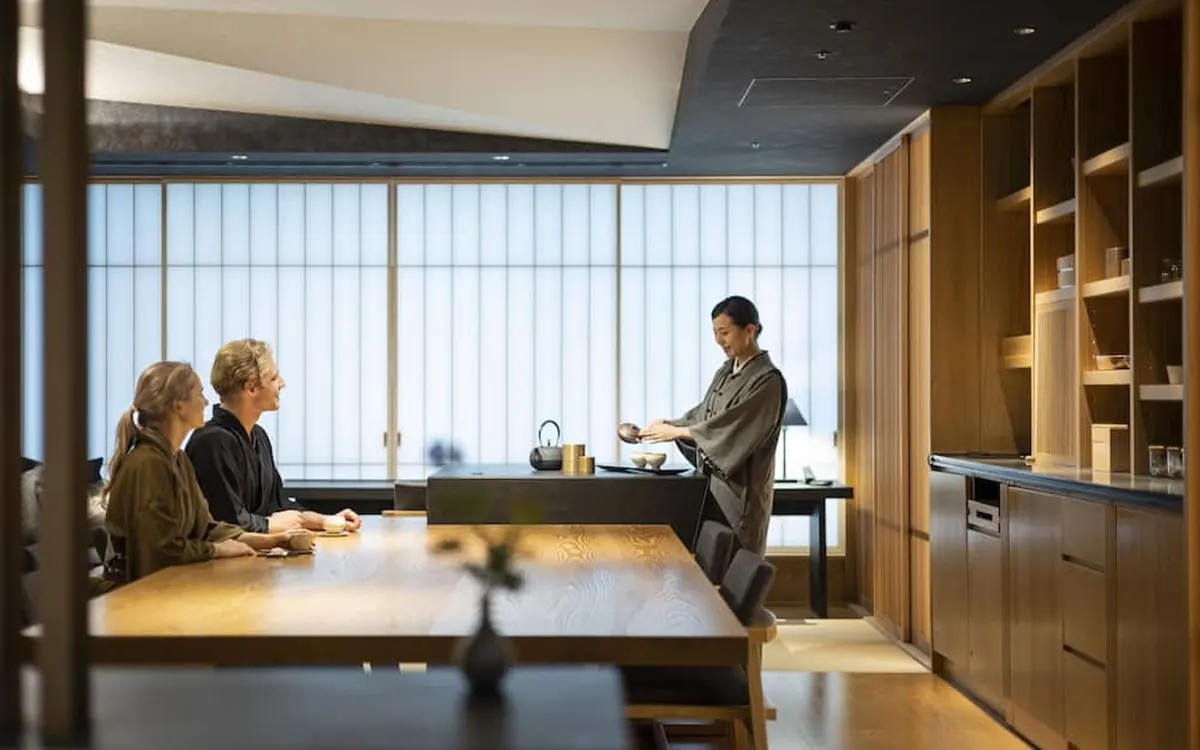
Each guest floor is designed as a self contained inn. Six rooms open onto a tatami corridor that leads to an ochanoma, the traditional living room of a Japanese home. There are 84 rooms in total, which is why the floor count and the room count line up at six per floor. The ochanoma is open 24 hours, is reserved for the guests on that floor only, and is stocked with tea, Nespresso, seasonal Japanese snacks and drinks that change through the day. It is the place where a staff member will bring you an evening nightcap, and it is the reason reviewers say the building feels like a dozen small ryokans stacked on top of each other rather than an 84 room hotel.
The arrival ritual sets the tone. Guests remove their shoes at the ground floor entrance, which is designed to resemble a Zen garden with a single ikebana arrangement, and staff place the shoes in a personal bamboo cubby. From that moment the entire building, including the elevators, is tatami or wood underfoot. Guests walk barefoot or in socks, and the hotel supplies kimono style room wear designed by Jotaro Saito that is acceptable everywhere inside the building, including the restaurant and the lounges.
Rie Azuma of Azuma Environmental Design led the architecture and interiors, working with Mitsubishi Jisho Sekkei and NTT Facilities. The black lattice that wraps the exterior is a modern take on an Edo period komon pattern, the kind of fine repeating motif used on kimono fabric, and it is why the tower looks unlike any other building in Otemachi. Hiroki Hasegawa handled landscape design and Ueyakato Landscape of Kyoto laid the garden and paving.
The result is quieter than any other luxury hotel in Tokyo. Condé Nast Traveler describes the area as blissfully quiet at night, and reviewers consistently call the interior hushed. That calm is the product the hotel sells. If you want a lobby bar scene, this is the wrong address.
Rooms and which one to book
There are only three room types, which keeps the decision simple.
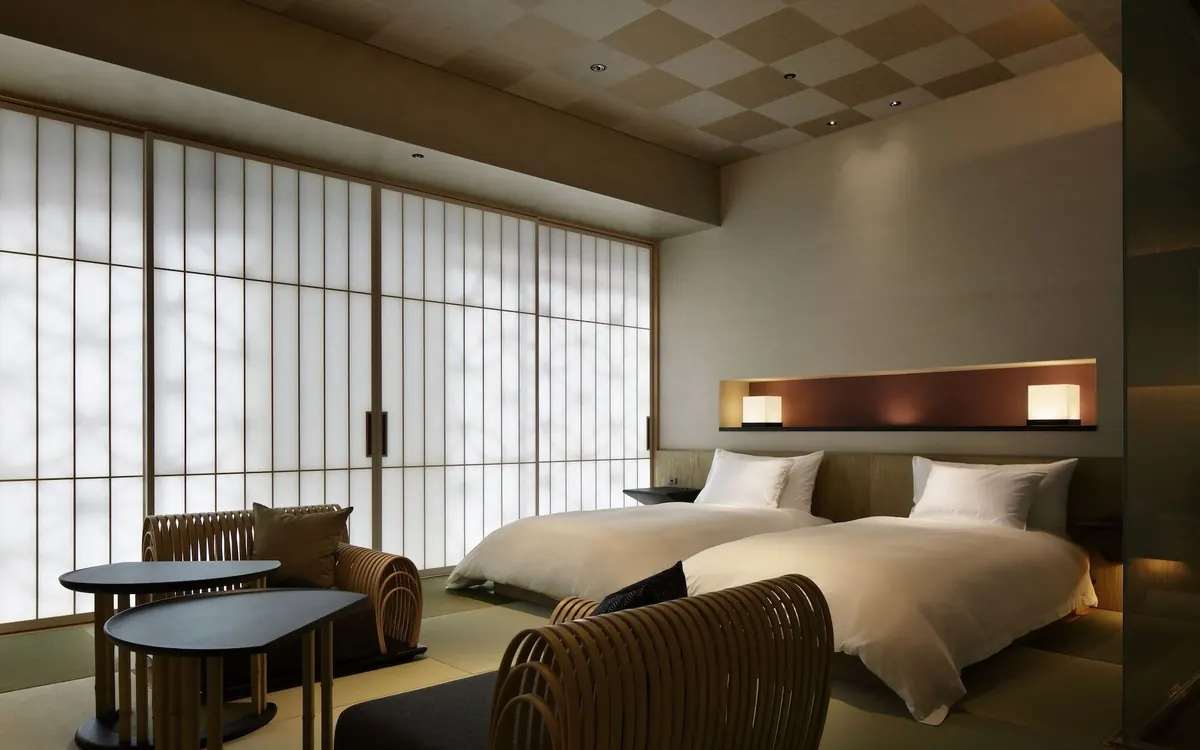
Yuri (Deluxe King): about 41 to 45 square metres with one king bed. The press kit quotes about 45 square metres, Hotels.com lists 41, and The Points Guy measured the category at 441 to 527 square feet depending on position. It has a tatami floor, a low bed platform, a sofa bench against the window, a deep soaking tub in a wood lined bathroom and sliding shoji screens over the windows. This is the entry category and usually the cheapest.
Sakura (Deluxe Twin): the same footprint as Yuri with two large single beds. The Points Guy found it priced higher than Yuri on its dates, so check both when booking because the layout is otherwise identical.
Kiku (Executive Triple): about 80 to 83 square metres, sleeping up to three on single beds. There is one Kiku per floor, in the corner, with a dining table and a walk in closet. This is the room for a family of three or anyone who wants space to spread out. The Points Guy measured its Kiku at 894 square feet.
Which to book: Yuri for a couple, Kiku if there are three of you or you plan to spend evenings in the room. Ask for a higher floor. Reviews on Tripadvisor mention faint street or courtyard noise on the lower floors, and the view improves as you climb even though no room has a true skyline panorama because of the lattice screen.
Two things to know before you arrive. The beds are low, closer to a futon on a platform than a Western hotel bed, and the lighting is deliberately dim and warm. Some guests find both restful and others find them a nuisance. The rooms have no outside shoes, no carpet and no desk in the conventional sense, so business travellers who need to work should factor that in.
The onsen
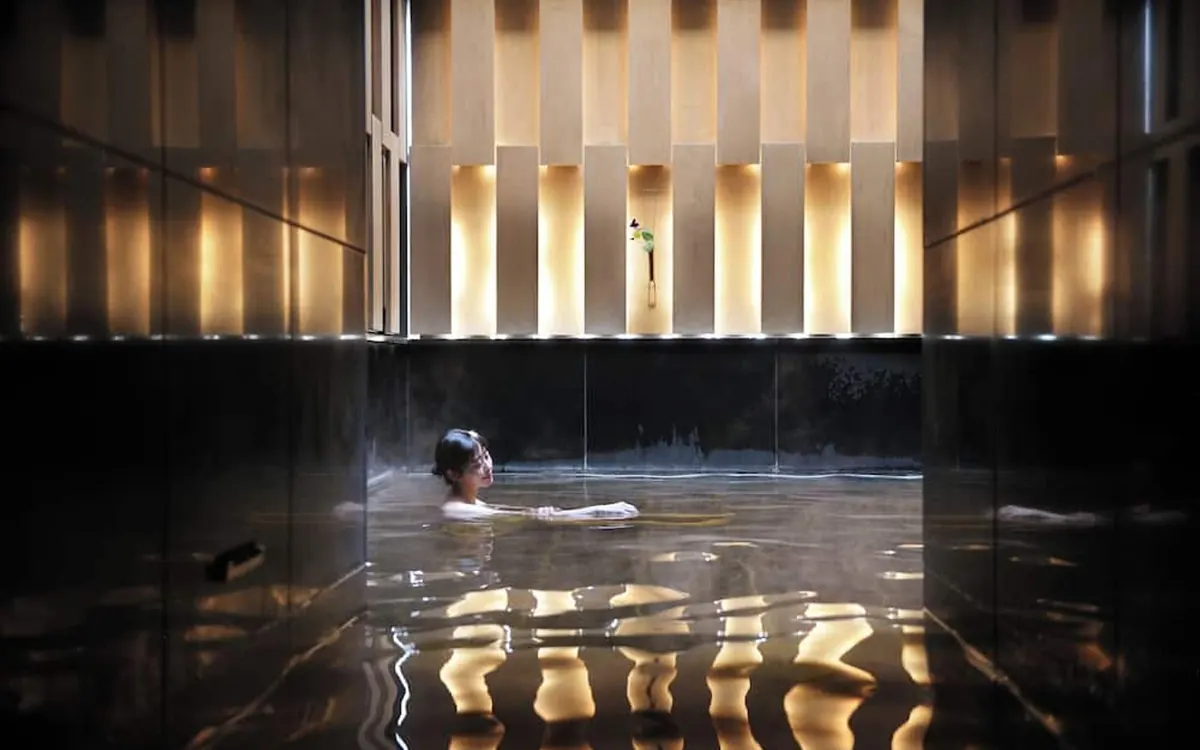
The hot spring is the reason to pay the premium. HOSHINOYA Tokyo is the only hotel in the city with a genuine natural onsen on site. The Otemachi Onsen is pumped from about 1,500 metres below the building, where the sea once covered the Kanto plain. The water is a strong sodium chloride spring containing iodine, salty on the lips and amber in colour, with seaweed minerals that the hotel says soften the skin and relieve fatigue.
The baths are on the 17th floor and are gender separated. Guests walk from the changing room into a cavernous indoor bath beneath a high ceiling, then through to an open air bath on the roof that is enclosed by tall walls and open to the sky. There is no skyline view; the point is to look up at clouds or stars from a hot pool in the middle of Otemachi. Photography is prohibited in the baths.
Hours are 3:00 pm to 11:30 am the following day, with a midday closure to drain and refill the pools. That schedule means a late morning soak before checkout is possible, and the baths are quiet in the hour after dawn. Only hotel guests may use the onsen; day visitors are not admitted.
Tattoos follow the Hoshino Resorts group policy, which since 2015 has accepted small tattoos provided they are covered with a sticker measuring 8 by 10 centimetres. The hotel's own Tokyo pages do not state the rule, so anyone with larger ink should ask before booking rather than assume. Expect a refusal for anything that cannot be covered.
Food
The dining programme changed in 2025 and most reviews online are out of date. The original Nippon Cuisine concept under chef Noriyuki Hamada, still named on the Michelin Guide page, has been replaced. Executive Chef Ryosuke Oka, born in 1985 in Shiga and trained at Kobe Kitano Hotel and under Pierre Gagnaire, took the kitchen on 1 May 2023, and on 16 September 2025 the main dining room launched a course called Lost Flavors of Japanese Home Recipes. It revives nostalgic home dishes and refines them, served in six tatami rooms and four table seats in the first basement.
The Lost Flavors course costs ¥28,000 per person excluding tax and the 10 percent service charge, which the press kit rounds to ¥33,880 all in. A children's meal is ¥5,000 and a vegetarian version of the course is ¥28,000 with three days' notice. Service begins at 5:30 pm and bookings close at 8:00 pm the day before.
Sushi Otemon opened in March 2025 with an eight seat counter in the same basement. It serves Edomae sushi alongside more inventive nigiri and seasonal appetisers at ¥30,000 per person before tax and service (¥36,300 inclusive), with two seatings at 5:30 pm and 8:00 pm. The counter accepts one menu per party and cannot accommodate allergies or dietary restrictions, so it is not the place for a mixed group.
Breakfast is served 7:20 to 9:20 am and costs ¥5,000 per adult and ¥1,600 per child, excluding tax and service, in either Japanese or Western style. A vegetarian Japanese breakfast is ¥5,500 with three days' notice. In room breakfast and an all day in room menu from 6:00 am to midnight are available, and in room dinner runs 5:00 to 9:00 pm. Same day cancellation of any meal booking incurs a 100 percent fee.
Beyond the restaurants, the ochanoma lounges supply snacks and drinks all day and a complimentary sake tasting runs 5:00 to 6:00 pm nightly beside reception. Afternoon tea is offered January to June.
Spa
The spa shares the 17th floor with the onsen, which makes a treatment followed by a soak the natural sequence. Treatments start at ¥28,050 for 90 minutes. The signature Shiki body treatment is ¥33,880 for 90 minutes and uses the four seasons as its theme. A full body treatment with leaf balls made from seasonal plants that are kneaded and steamed is listed on the official page. The Points Guy priced the Wakatake full body massage at US$137 to US$186 for 60 to 90 minutes.
Two wellness programmes sit alongside the menu: a Deep Breathing Regimen that pairs a warm bath with fermented foods to support the autonomic nervous system, and a Body Re Modelling Session, a personal training assessment of joint flexibility and muscle balance. Prices for both are on request.
Cultural programming is a large part of the value. A private tea ceremony costs about US$64 per person, kenjutsu sword practice at dawn is complimentary, and seasonal excursions are offered with reservation.
What it costs
Rates below are for two adults in the entry Yuri or Sakura room, room only, in US dollars. Dated quotes are live prices seen on 23 October 2026; the rest are Kayak's average for that month over the past year.
| Season | Dates checked | Nightly rate for two (USD) | Source |
|---|---|---|---|
|
Low (January)
|
8 to 10 Jan 2027 | 507 Priceline, 516 Klook | Google Hotels knowledge graph |
|
Low (January average)
|
12 month average | about 828 | Kayak |
|
Winter (February average)
|
12 month average | about 1,255 | Kayak, the dearest month of the year |
|
Shoulder (May)
|
12 month average | about 1,037 | Kayak |
|
Shoulder (October)
|
12 month average | about 1,243 | Kayak |
|
Peak (late March sakura)
|
12 month average | about 1,096 March, 1,230 April | Kayak |
|
Peak (November foliage)
|
16 to 17 Nov 2026 | about 1,280 (£959) | Hotels.com |
|
Cheapest month
|
August | about 697 | Kayak |
|
Weeknight average
|
Sun to Thu, last two weeks | about 991 | Kayak |
Trip.com lists the hotel from US$1,313 to US$1,580 undated. The Points Guy in 2024 quoted Yuri from about US$400 per person per night, Sakura from US$550 and Kiku from US$795, with half board plans from US$500 per person. Kayak says Sunday is the cheapest night at an average of about US$838 and Saturday the dearest at about US$1,526.
Add the extras to the room rate: ¥5,000 per person for breakfast, ¥28,000 to ¥30,000 per person for dinner, and ¥28,050 for a 90 minute spa treatment. A couple staying two nights with one dinner and two breakfasts should budget roughly ¥96,000 (about US$640) on top of the room before service and tax.
The hotel is not part of American Express Fine Hotels and Resorts, the Chase Luxury Hotel and Resort Collection or Capital One's Premier Collection, and Hoshino Resorts runs no points scheme. Booking direct or through a travel advisor is the only way to secure upgrades or an included meal.
Getting there
Otemachi Station is connected to the building. Exit A1 of the Marunouchi Line opens beside the hotel and the station is also served by the Tozai, Chiyoda, Hanzomon and Mita lines, which makes it one of the best connected addresses in the city. Tokyo Station's Marunouchi North Exit is a 10 minute walk or one stop on the Marunouchi Line for ¥180, and a taxi between the two is about US$10.
From Haneda Airport allow 30 to 60 minutes by taxi or ride hail at US$55 to US$80, or about an hour by subway with one change for ¥550. Hotels.com puts the drive at about 40 minutes. From Narita the Narita Express to Tokyo Station costs ¥3,700 each way and takes about an hour, then walk or take the subway; a taxi runs up to US$200 and one to two hours, and Hotels.com quotes about 70 minutes by car. Parking is available at ¥300 per 30 minutes from 7:00 am. There is no hotel shuttle.
Check in is from 3:00 pm and check out is at noon. Guests must be 18 or older to check in. Luggage sent ahead should carry the check in date and the lead guest's name on the delivery slip.
Honest drawbacks
The neighbourhood is dead after dark. Otemachi is a financial district. On weekdays it hums with office workers at lunch; on evenings and weekends the streets empty. There are no izakaya alleys and no shopping within a two minute walk, although the Marunouchi side of Tokyo Station is 10 minutes away. Guests who want to step out of the lobby into Tokyo nightlife will be disappointed.
The price does not buy conventional luxury. Tripadvisor reviews titled "Not worth it" and "Not worth the money" make the same point: the rooms are stylish but modest in size for the rate, the beds are low, the lighting is dim and there is no pool, no gym of note and no skyline view. If your benchmark is Aman Tokyo or the Four Seasons Otemachi, the room will feel plain. Lower floor rooms can pick up faint street or courtyard noise.
The format is not for everyone. Shoes off for the whole stay, kimono style room wear, shared lounges with the five other rooms on your floor, and a set menu dinner that must be booked the day before. The Points Guy notes the lounges can feel too intimate. Some guests find the quiet oppressive rather than calming. Add the absence of Amex FHR, Chase or Capital One benefits and the dearth of English language signage in the baths, and the hotel asks for a certain amount of surrender.
Who should book and who should not
Book it if you are a couple or a solo traveller who wants a ryokan night without a bullet train, who will use the onsen twice a day, who likes a set menu and who values quiet over buzz. It also suits a first visit to Japan when the itinerary has no room for Hakone or Kyoto, and it suits anyone who finds Tokyo's scale overwhelming and wants a soft landing after a long flight.
Skip it if you travel with children who need a pool, if you have large tattoos, if you want a view, if you plan to work from the room, or if you expect loyalty perks. Skip it too if your budget stretches to one splurge night only and you would rather have the drama of the Aman lobby or the restaurants of Janu.
HOSHINOYA Tokyo vs Aman Tokyo vs Janu Tokyo
| HOSHINOYA Tokyo | Aman Tokyo | Janu Tokyo | |
|---|---|---|---|
|
Entry rate for two
|
US$500 to 830 low, US$1,000 to 1,300 peak | about US$2,660 (Kayak, Jan 2027) | from about US$944 at opening |
|
Entry room size
|
41 to 45 sqm | 71 sqm | 55 sqm |
|
Rooms
|
84 | 84 | 122 |
|
Pool or onsen
|
Natural rooftop onsen, no pool | 30 m indoor pool, onsen style baths | Pool in 4,000 sqm wellness centre |
|
Spa
|
Small, 17th floor, from ¥28,050 | Among Tokyo's largest, steam, yoga, Pilates | 4,000 sqm over four floors, five studios, seven treatment rooms |
|
Restaurants
|
3 plus floor lounges | 5 venues | 8 venues |
|
Location
|
Otemachi, palace moat | Otemachi Tower, floors to 38 | Azabudai Hills, Minato |
|
Vibe
|
Hushed vertical ryokan | Monumental minimalism | Social and wellness led |
|
Points programme
|
None | None | None |
|
Michelin Keys 2026
|
None | 2 | 2 |
|
Best for
|
Culture first couples, onsen lovers | Views, pool, big budgets | Gym devotees, groups, younger luxury |
Aman Tokyo and HOSHINOYA Tokyo sit 300 metres apart in Otemachi and both have 84 rooms, but they sell opposite experiences. Aman starts at 71 square metres, puts its lobby 33 floors up under a paper lantern ceiling, has a 30 metre pool and charges roughly three times the price. Its baths are onsen style, filled with heated water rather than a natural spring. Choose Aman for the view and the grandeur; choose HOSHINOYA for the hot spring and the tatami.
Janu Tokyo, Aman's younger sibling, opened in March 2024 in Azabudai Hills with 122 rooms from 55 square metres, eight restaurants and bars and a 4,000 square metre wellness centre with one of the largest gyms in the city. It is lively, social and far better for a group or a fitness focused guest. Its entry rate at launch was about US$944, which overlaps with HOSHINOYA's peak season pricing. Both Aman and Janu hold two Michelin Keys in the 2024 and 2026 selections; HOSHINOYA Tokyo appears in the Michelin hotel selection but has not been awarded a Key, which reflects how the inspectors weight facilities and space. None of the three offers a points programme.
Alternatives
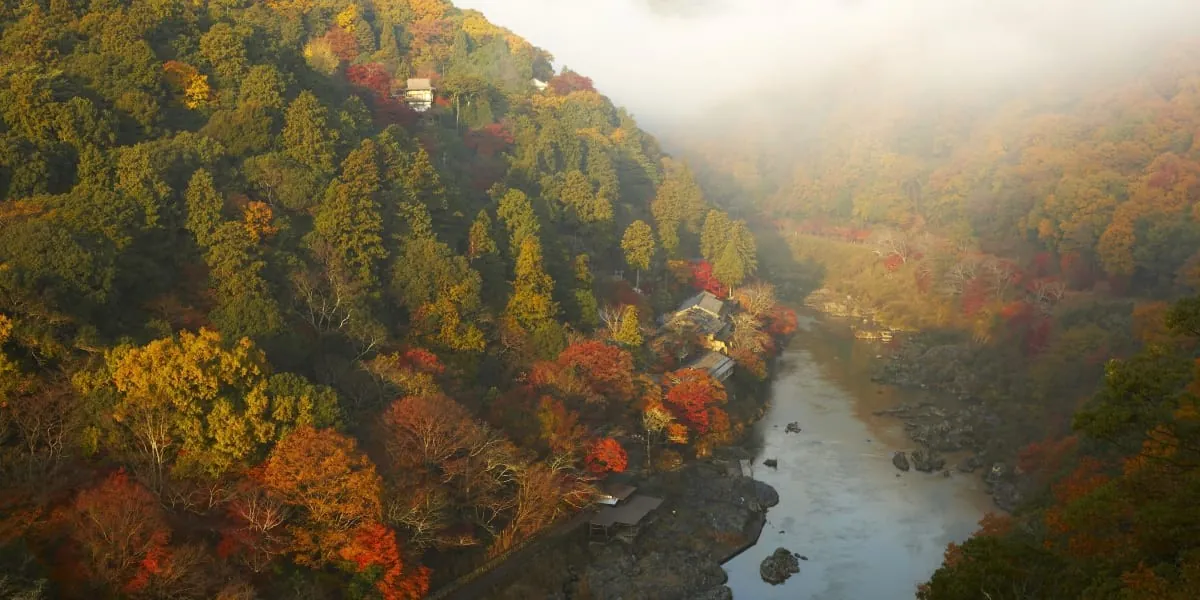
HOSHINOYA Kyoto is the brand's riverside ryokan in Arashiyama, reached by boat, and holds one Michelin Key in the 2026 selection. It is the choice if you can add two nights in Kyoto and want the full ryokan experience with a garden and the Oi River rather than a skyscraper.
Trunk Hotel Yoyogi Park is the Tokyo option for design and buzz, a boutique with a rooftop pool overlooking the park, and it holds one Michelin Key in both the 2024 and 2026 selections. It is a better fit for younger travellers who want Shibuya on the doorstep.
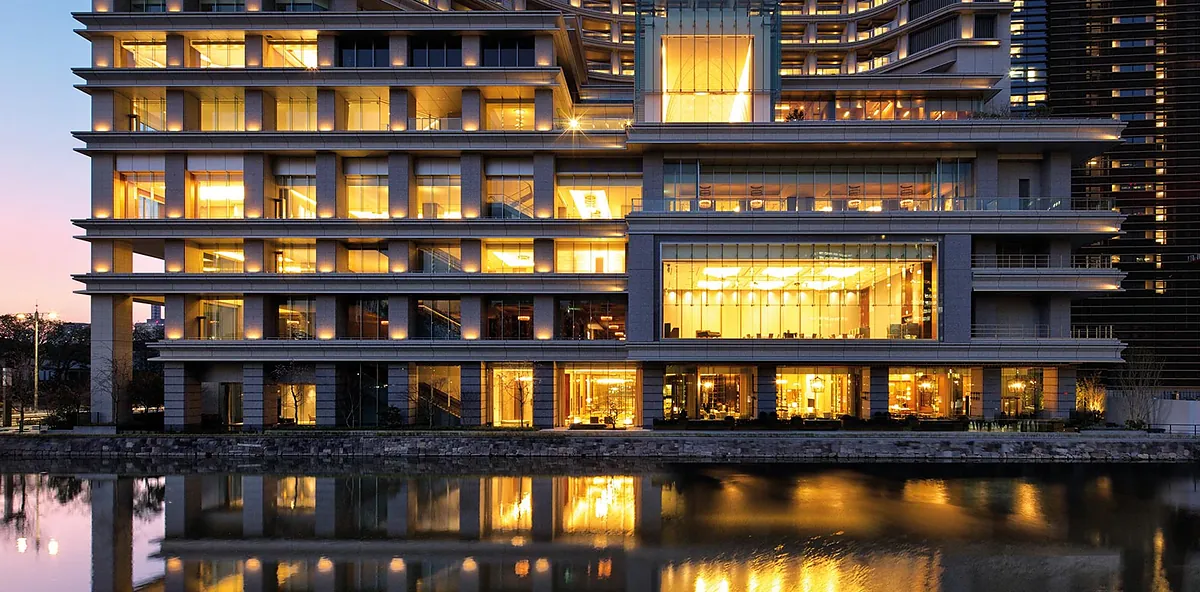
Palace Hotel Tokyo is five minutes from HOSHINOYA on the Imperial Palace moat and holds three Michelin Keys in 2024, 2025 and 2026, one of only seven hotels in Japan at that level. It has an indoor pool, balcony rooms over the moat and a large evian spa, and it is the conventional luxury alternative in the same neighbourhood.
FAQs
Does HOSHINOYA Tokyo have a real onsen?
Yes. The Otemachi Onsen is pumped from about 1,500 metres underground and is a strong sodium chloride spring with iodine. The baths are on the 17th floor with indoor and open air sections and are for hotel guests only.
Are tattoos allowed in the onsen?
Hoshino Resorts group policy accepts small tattoos covered with an 8 by 10 centimetre sticker. The Tokyo property does not publish its own rule, so guests with larger tattoos should contact the hotel before booking.
How much does HOSHINOYA Tokyo cost per night?
Entry rooms for two ran US$507 to US$516 for 8 to 10 January 2027 on Google Hotels, about US$1,280 for 16 to 17 November 2026 on Hotels.com, and Kayak's monthly averages range from about US$697 in August to about US$1,255 in February.
Do you have to take your shoes off?
Yes. Shoes are removed at the entrance and stored in a personal bamboo locker, and the whole building including the elevators is tatami or wood underfoot.
How many rooms does HOSHINOYA Tokyo have?
84 rooms across 14 guest floors, six rooms per floor, in three categories: Yuri (king), Sakura (twin) and Kiku (triple).
Is breakfast included?
Not in standard room only rates. Japanese or Western breakfast is ¥5,000 per adult and ¥1,600 per child before tax and service, served 7:20 to 9:20 am.
What does dinner cost?
The Lost Flavors of Japanese Home Recipes course is ¥28,000 per person and Sushi Otemon is ¥30,000 per person, both before tax and 10 percent service. Bookings close at 8:00 pm the day before.
Is HOSHINOYA Tokyo on Amex Fine Hotels and Resorts?
No. It is not part of Amex FHR, Chase Luxury Hotel and Resort Collection or Capital One Premier Collection, and Hoshino Resorts has no points programme.
Can children stay?
Yes. Children under 12 can share a bed up to the room maximum, and Hotels.com lists children aged 3 and under staying free on existing bedding. Cots are not provided and the Kiku room sleeps three.
How far is HOSHINOYA Tokyo from Tokyo Station?
About a 10 minute walk from the Marunouchi North Exit, or one stop on the Marunouchi Line from Otemachi Station, which connects directly to the hotel.
Sources
- HOSHINOYA Tokyo official site
- Property details press kit (opening date, floors, room sizes, chef, prices)
- Official onsen and spa page
- Official dining page (menus, prices, hours)
- Official access page
- The Points Guy review (rates, transfers, loyalty status)
- Condé Nast Traveler review
- Condé Nast Traveller Middle East review
- Michelin Guide hotel page
- Michelin Key Japan 2024 list
- Michelin Key Japan list (2026 selection)
- Travel Voice on the 2026 Michelin Key selection
- Hoshino Resorts tattoo policy (2015)
- Hotels.com listing (room sizes, children policy, November rate)
- Kayak hotel page (monthly averages)
- Trip.com listing
- Tripadvisor review "Not worth it"
- Tripadvisor review "Not worth the money"
- Aman Tokyo official: www.aman.com/hotels/aman-tokyo and www.aman.com/hotels/aman-tokyo/accommodation
- Janu Tokyo opening report
- Google Hotels knowledge graph and SERP data via DataForSEO, 23 October 2026 (keyword "hoshinoya tokyo", United States, English)