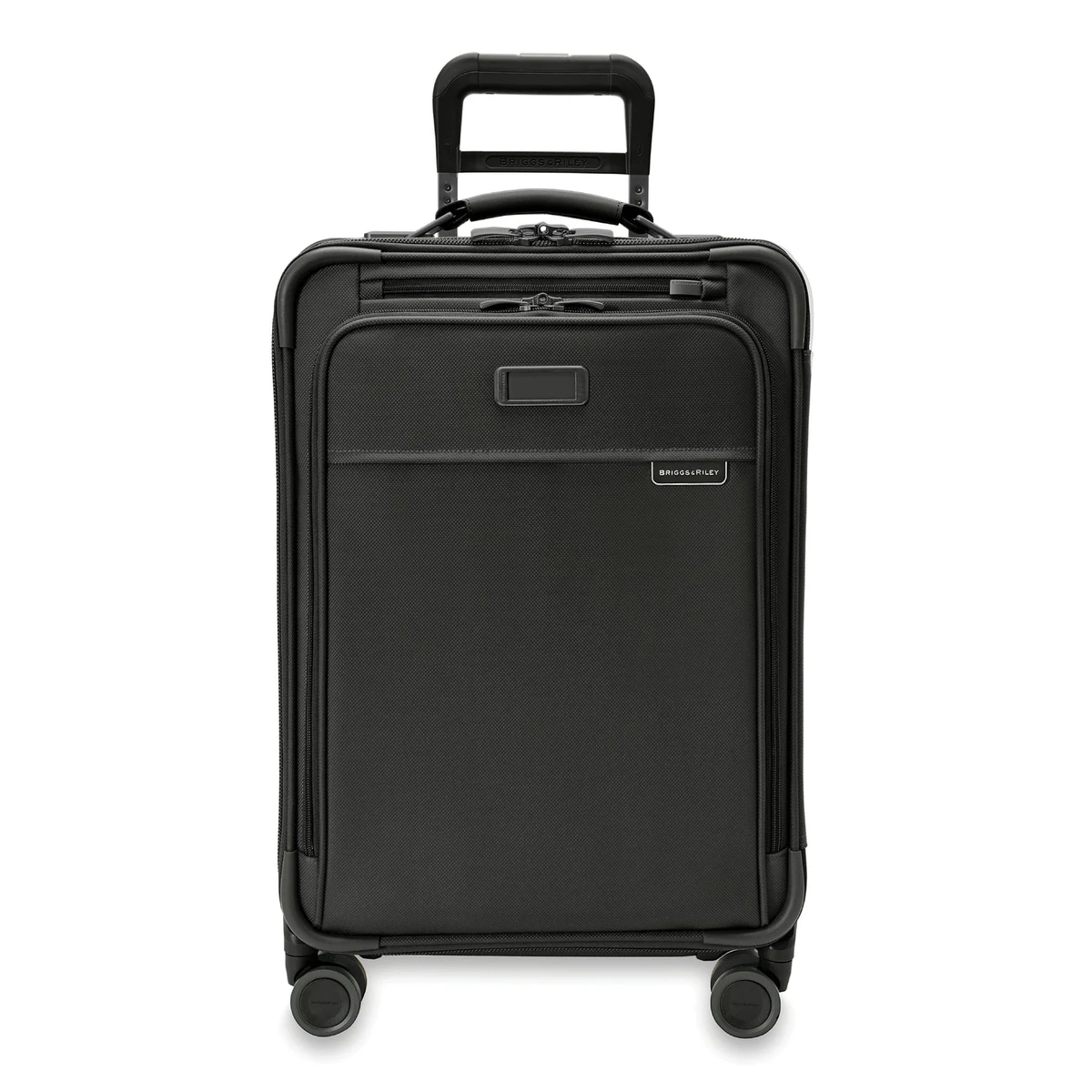
Briggs & Riley Baseline Essential 22 inch Carry On Expandable Spinner
USD $729The stronger purchase for most people who value lifetime damage repairs over built in charging and front access.
We may earn a commission from links on this page, at no extra cost to you. How rankings and funding work.
Home › Essentials › Luggage
Travel essentials · Luggage
Briggs & Riley for most people: it costs less, its lifetime warranty covers airline damage, and CX expansion adds real packing space. Tumi suits buyers who want front access to the main compartment, built in charging and the Tumi Tracer recovery programme, and accept a five year warranty at a higher price.
By Jack Williamson, the LHC house pen name · How we workPrices checked 15 November 2026
The stronger purchase for most people who value lifetime damage repairs over built in charging and front access.
Choose it for features you will use regularly, not for a stronger warranty than the cheaper rival.
USD prices checked 15 November 2026. The Baseline holds 37 litres against the Tumi’s 35, and expands to 48 litres. Weight and dimensions are the brands’ own figures.
| Specification | Briggs & Riley Baseline Essential 22 inch Carry On Expandable Spinner | Tumi Alpha Dual Access Expandable Carry On, style 159002 |
|---|---|---|
| Price | USD $729 | USD $950 |
| Empty weight | 10 lb / 4.6 kg | 4.26 kg / 9.4 lb |
| Capacity | 37 litres, 48 litres expanded | 35 litres |
| Dimensions | 22 x 14 x 9 inches, 11.5 inches deep expanded | 21.75 x 14 x 9 inches |
| Material | Ballistic nylon | FXT ballistic nylon |
| Expansion | CX expansion to 11.5 inches deep | Two inches |
| Warranty | Free repairs for life, no proof of purchase needed, including airline damage | Five years |
Choose Briggs & Riley if a carry on is a purchase you want to stop thinking about. The Baseline Essential 22 inch Carry On Expandable Spinner costs $729, compared with $950 for the Tumi Alpha Dual Access Expandable Carry On, style 159002. Both use ballistic nylon and both expand. The lower price does not ask you to give up the central features of a business suitcase, and the warranty is the stronger reason to choose it.
That answer changes if accessing the main compartment from the front is part of your routine. Tumi offers dual access, so its appeal is not just a different badge on a similar bag. Think about how you pack a case and what you need to reach during a journey. If those items live in the main compartment, the way you open the suitcase can matter more than a small difference in empty weight.
For buyers who want charging built into the case, Tumi supplies a USB C port. A power bank is sold separately, so the port is a connection rather than a source of power. There is no reason to pay the premium solely because you imagine the suitcase comes with a battery. Its other specific extras are Tumi Tracer and a built in TSA lock.
Choose neither by brand reputation alone. The Baseline is not the Sympatico model in our wider luggage ranking, and this Alpha is not the 19 Degree model in our premium carry on comparison. A brand's general warranty reputation is only a starting point: check the weight, price and features attached to the exact model you are buying. That is why the table names both cases in full.
The verified US price for the Baseline is $729 on the brand's own site. The Tumi list price is $950 at US authorised retailers, a difference of $221. That is enough to deserve a reason, rather than being treated as a small step up. Tumi's answer is its particular access and technology arrangement, not a longer warranty or a lower purchase price.
There is no confirmed sale price here. A retailer promotion may change the amount you see when you click through, but the decision uses the list prices checked on 15 November 2026. Compare the same style number, 159002, rather than a different Alpha model which happens to share the name. A lower price attached to another case is not a saving on this one.
The Baseline's lower cost makes the warranty argument easier, but it is still expensive luggage. If you travel only occasionally, you should ask whether either case solves a problem you actually have. Our full suitcase guide includes other price points. Paying for long ownership is sensible only when you intend to keep the case, rather than replace it because your taste changes.
One way to frame the difference is to separate the purchase from the service promise. The $221 premium gets you Tumi's named features now. It does not buy lifetime cover in place of five years. If you value those features, the price can be defensible. If you would never use the front access or charging port, the Baseline is the clearer purchase.
Briggs & Riley's lifetime guarantee provides repairs for life, free of charge, with no proof of purchase needed, including airline damage. That last part matters more than the word lifetime on its own. A suitcase may be damaged while it is out of your hands, and a warranty limited to manufacturing faults addresses a different problem. Here the published coverage is a practical reason to favour the Baseline rather than a decorative promise beneath the price.
The Tumi Alpha has a five year warranty. That is a fixed term, and it does not match Briggs & Riley's lifetime airline damage cover. If warranty is your main concern, read the current terms for style 159002 before paying the higher price. The price and service reputation do not turn five years into lifetime protection.
A repair guarantee does not mean nothing will go wrong. It gives you a route to fix a fault or damage, not proof that the fabric, wheels or handle will never need attention. If you need the case back before a particular departure, ask the service provider for a timeframe rather than assuming it will be ready.
Tumi Tracer belongs in a separate column in your thinking. It is a recovery programme, not an extension of the five year warranty and not a promise that a lost suitcase will always come back. It may be useful to you, but it solves a different problem from paying for a repair. For the buyer who prioritises damage cover over recovery registration, Briggs & Riley remains ahead.
The Baseline measures 22 x 14 x 9 inches before expansion. That matches the common published carry on limit for American, Delta and United, including wheels and handles. Its CX system expands the depth to 11.5 inches, which is over most airline carry on limits. Expansion gives you flexibility while packing, but it is not permission to take a deeper suitcase through a sizer which allows only nine inches.
The Tumi measures 21.75 x 14 x 9 inches and expands by two inches. In its normal form it also sits within that common limit on paper. Open the expansion and the depth becomes the issue. Whichever case you buy, make the airline's limit the final check rather than relying on the words carry on in the product name. A permitted shape and the volume you want are separate requirements.
Briggs & Riley lists the Baseline at 10 lb, or 4.6 kg. The Tumi figure is 4.26 kg, or 9.4 lb. Tumi is lighter by 0.34 kg using those metric figures. That small difference is worth considering if lifting weight matters to you, but it does not outweigh the difference in damage cover.
The Baseline holds 37 litres against the Tumi's 35, and expands to 48 litres. That gives it a little more room before expansion and useful extra space when you need it. Keep the expanded depth in mind: the additional packing room is better suited to journeys where you can check the case.
Ballistic nylon is the starting point for both models, with Tumi naming its fabric FXT ballistic nylon. Both are fabric cases, so the choice here is not the aluminium versus plastic question found in many other luggage comparisons. Focus on access, expansion and cover rather than assuming one fabric label guarantees how the case will wear.
The more meaningful distinction is how you use the suitcase. Tumi's dual access to the main compartment, USB C charging port, Tracer programme and built in TSA lock are concrete features. Read them as individual conveniences. If you use a separate charging pouch and rarely open a packed suitcase until arrival, two of the reasons to spend more may disappear before you reach checkout.
For Briggs & Riley, the CX expansion system and lifetime airline damage repair cover are the two facts that carry the recommendation. They address packing flexibility and long ownership. Those are useful advantages you can assess before buying, alongside the 4.6 kg weight and exact dimensions.
I would choose Tumi if front access to the main compartment was something I used repeatedly, and if the charging connection and Tracer programme were features I wanted rather than extras I might try once. For a traveller who regularly needs something from a packed case, that convenience could be worth the premium.
I would stay with Briggs & Riley if my main concern was what happens when an airline damages the suitcase years into ownership. Spending less for that lifetime repair promise is a strong combination. The extra weight is the compromise, and a buyer who is especially sensitive to lifting weight should give it real attention rather than dismissing it.
The final check is simple: read the exact model page, confirm the current price, and decide whether Tumi's access arrangement is worth $221 to you. If the answer is vague, buy the Baseline. If the answer describes a repeated packing annoyance it would remove, the Alpha has a sensible role even though it loses the broad value recommendation.
The lower priced choice in this pair puts its money into long ownership and packing flexibility. The exact Baseline is a ballistic nylon case, not the polycarbonate Sympatico featured elsewhere on the site. It holds 37 litres against the Tumi’s 35, and expands to 48 litres. At 10 lb, or 4.6 kg, it is the heavier of the two.
The stronger purchase for most people who value lifetime damage repairs over built in charging and front access.
Prices checked 15 November 2026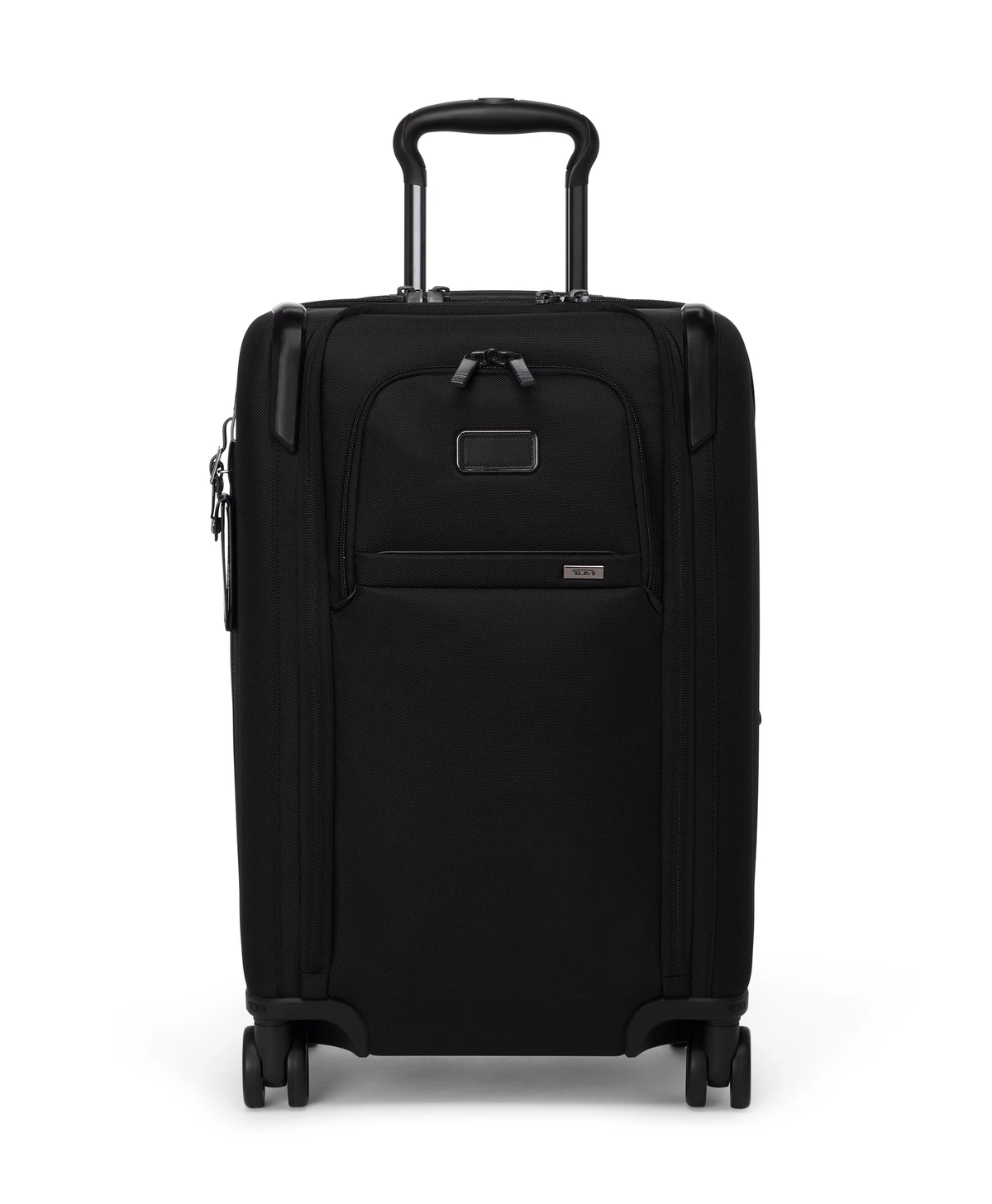
The Alpha earns its place through access rather than warranty length. Dual entry to the main compartment, a USB C charging connection, Tracer registration and a built in TSA lock are specific reasons to consider it. The power bank is separate, and the higher price does not buy lifetime cover.
Choose it for features you will use regularly, not for a stronger warranty than the cheaper rival.
Prices checked 15 November 2026For most buyers in this comparison, yes. The $729 Baseline costs $221 less than the $950 Tumi Alpha and offers lifetime repairs including airline damage.
Its lifetime warranty covers repairs including airline damage. That is the principal reason to choose the Baseline for long ownership.
The Alpha Dual Access Expandable Carry On, style 159002. Its list price at US authorised retailers is $950, with a five year warranty.
Unexpanded, both cases fit 22 x 14 x 9 inches on paper. Both expand, so check the packed depth and your airline requirements before departure.
No. The USB C charging port requires a separately purchased power bank.
Yes if you will regularly use dual access, the charging port and Tumi Tracer. If those features are incidental, the cheaper Baseline and its lifetime airline damage repairs are the better value.