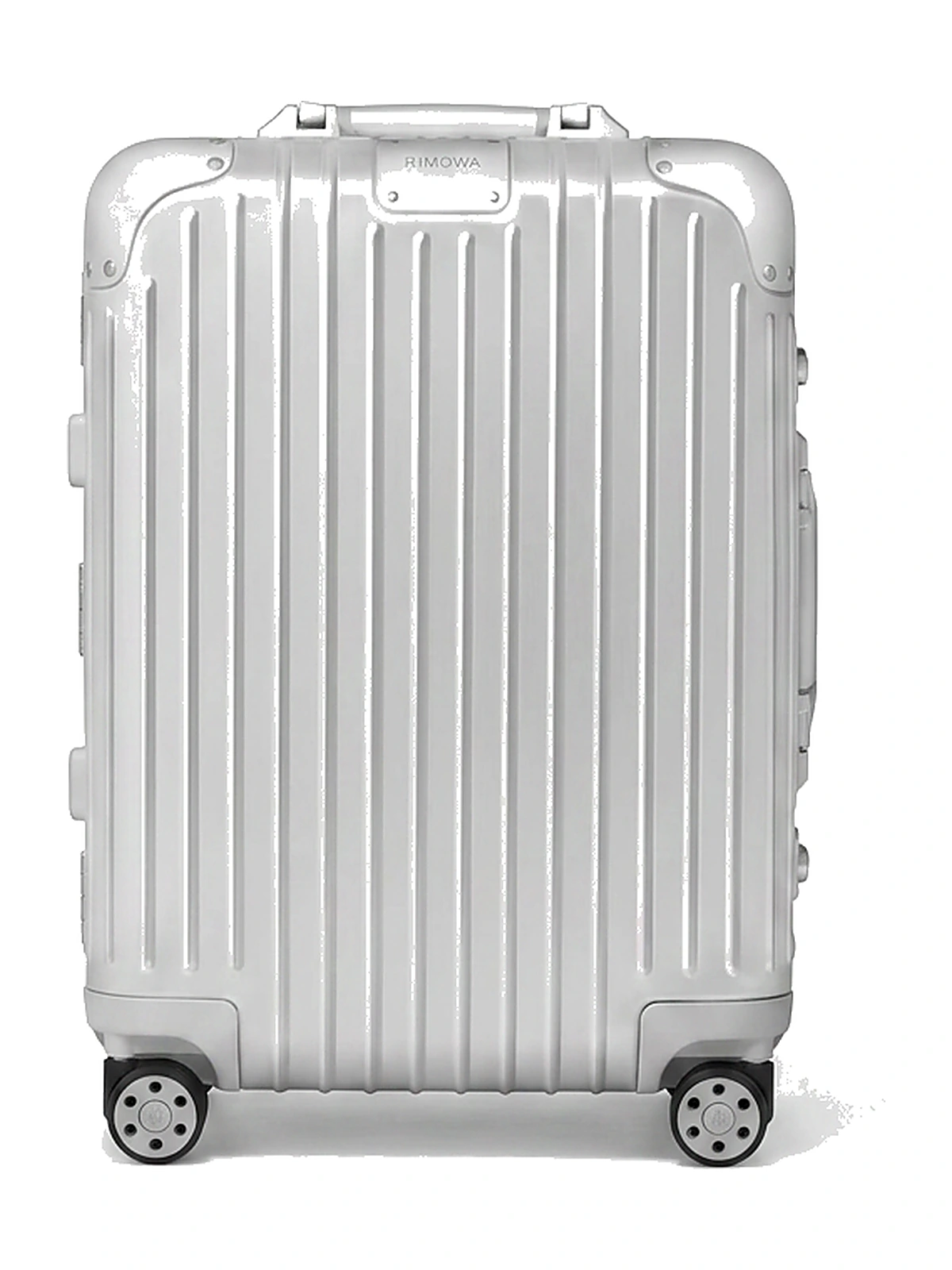
Rimowa Essential Cabin
$990The longest lasting case here, with the strongest repair network.
We may earn a commission from links on this page, at no extra cost to you. How rankings and funding work.
Home › Essentials › Luggage
Travel essentials · Luggage · 2026
The Rimowa Essential Cabin at $990 wins and outlasts the rest by years, but the Monos Carry On Pro does 90 percent of the same job for $295. Tumi has the best interior at $795, and Away carries the most.
By Jack Williamson, the LHC house pen name · How we workPrices checked 19 September 2026
The longest lasting case here, with the strongest repair network.
The value pick with a front laptop compartment.
The best interior for weekly business travel.
Weights are the empty case on my own scale, not the manufacturer figure. Scores are mine across roughly 60 flights in the year to August 2026. Prices last verified 19 September 2026.
| Case | Price | Weight | Warranty | Score | Best for |
|---|---|---|---|---|---|
| Rimowa Essential Cabin | $990 | 3.2 kg | Lifetime | 9.1 | 30+ trips a year |
| Tumi 19 Degree Expandable Carry-On | $795 | 3.6 kg | 5 years | 8.8 | Weekly business travel |
| Away The Bigger Carry On | $295 | 3.6 kg | Limited lifetime | 8.6 | Maximum cabin capacity |
| Monos Carry On Pro | $295 | 3.5 kg | Lifetime | 8.9 | Best value overall |
| Samsonite Freeform | $154 | 3.0 kg | 10 years | 8.2 | 7 kg cabin limits |
This is for anyone standing in a department store deciding whether a case can possibly be worth $990. It can, and only if you fly more than 30 times a year. Below that number the Monos Carry On Pro at $295 is the better purchase and the $695 you keep pays for two nights somewhere good. Everything else on this page is the detail behind that sentence.
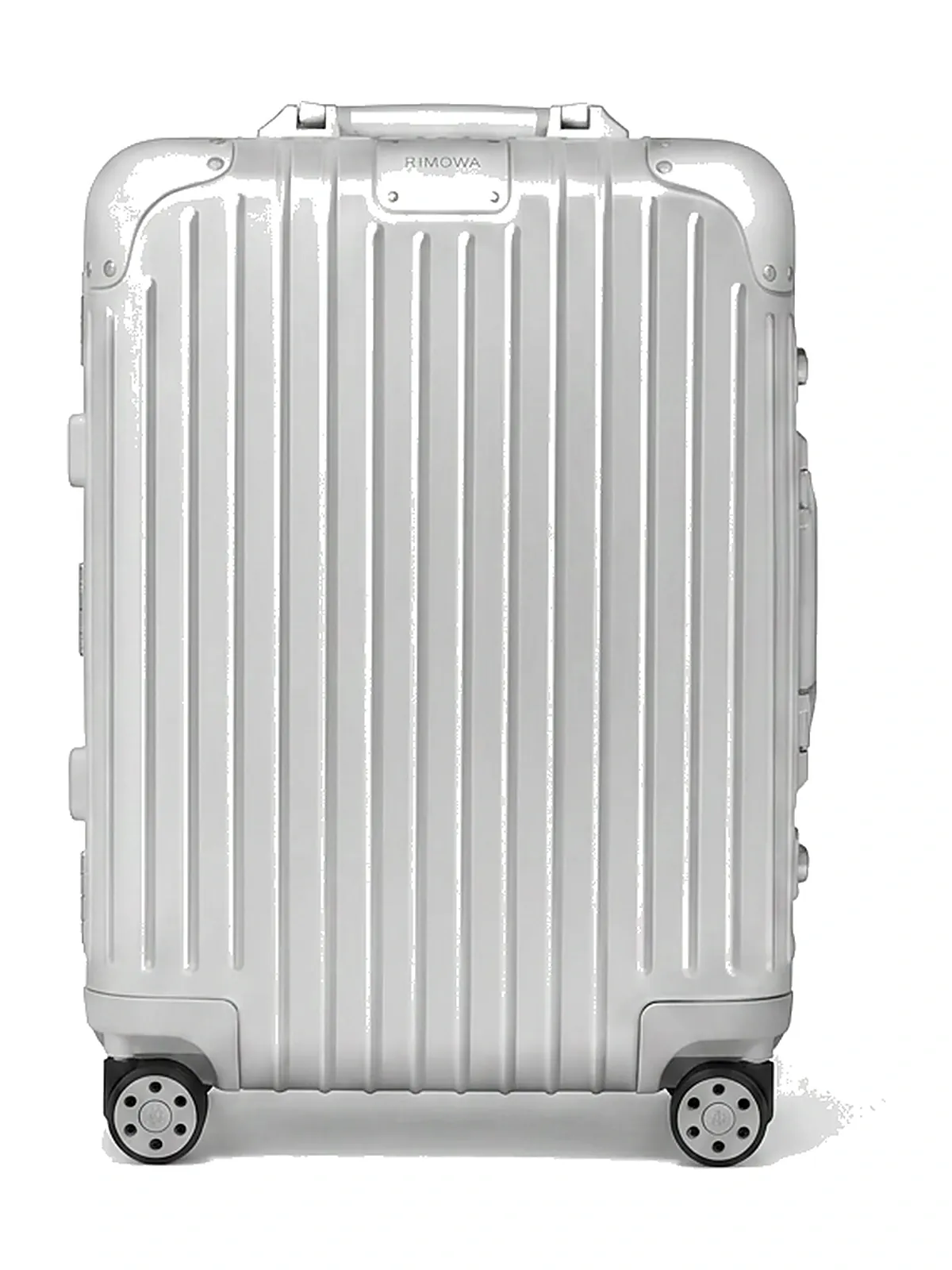
The Essential is the polycarbonate line, which confuses people who assume every Rimowa is aluminium. It uses the same grooved profile as the Original but in a high gloss or matte plastic shell that weighs less than the metal version and costs $990. Structurally it is the better travel case. Aluminium dents and keeps the dent. Polycarbonate flexes, absorbs the hit and comes back.
The wheels are the reason people buy this case twice. Rimowa fits multiwheel units with a wide axle and a smooth bearing, and after two years of pavement, tram tracks and terminal carpet mine still track straight without the shimmy that cheaper spinners develop at speed. The telescopic handle is the other tell. It has almost no lateral play, locks at four heights and does not rattle. Both details sound trivial until you have pushed a wobbling case for eleven minutes down a Heathrow pier.
The current published empty weight is 3.2 kg, which is 0.3 kg lighter than the Monos and 0.2 kg heavier than the Samsonite. Dimensions are 55 x 40 x 23 cm, so it clears the standard European and Middle Eastern sizer without argument. It does not clear a strict 7 kg total limit once packed for a week.
The story that convinced me was a five city run in April 2026: London to Paris, Paris to Milan, Milan to Zurich, Zurich to Vienna, Vienna home. Four of those legs were on carriers that gate check aggressively and three were on trains where the case lived in an overhead rack. It went into the gate check hold twice, came back with two scuffs that polished out, and the wheels survived the cobbles in the fifth arrondissement, which is where I have destroyed two cheaper cases. When you are staying somewhere like the properties in my Paris luxury hotel guide, arriving with a case that still looks correct in a marble lobby is a real if slightly ridiculous benefit.
Buy it if you fly 30 or more times a year, keep luggage for a decade, and value the global repair network. At four trips a year it is jewellery. Compare it against the value pick in my Monos vs Away vs Rimowa breakdown.
The longest lasting case here and the only one with a global repair network, at a price that only makes sense above 30 flights a year.
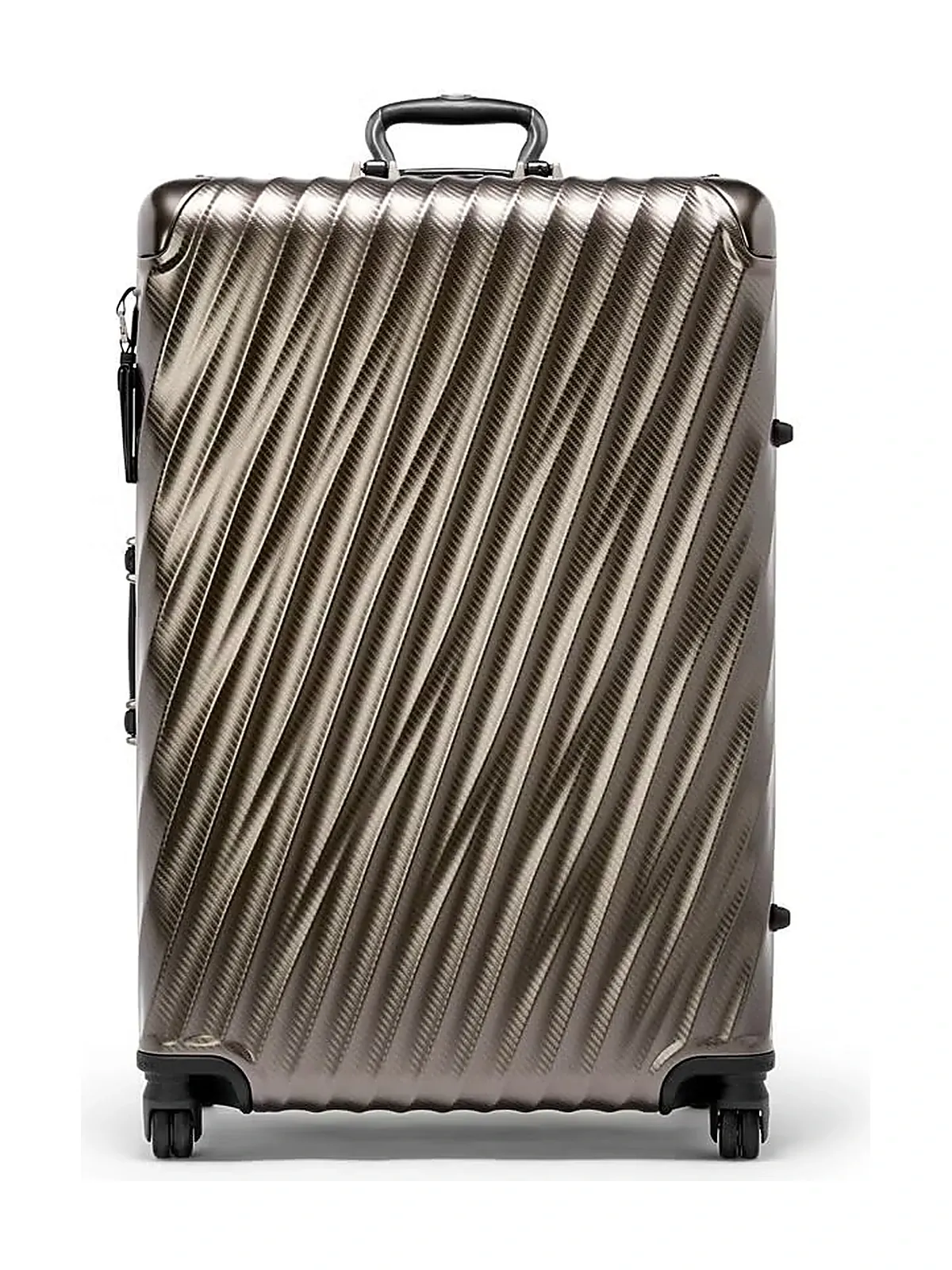
Tumi sells the 19 Degree Expandable Carry-On at $795, and the polycarbonate version is the one assessed here. The sculpted diagonal shell is not only styling. The ridges add rigidity across the face of the case, which is where a flat shell bows when the overhead bin is full and someone leans on it. Mine has never cracked and has taken more abuse than any other case here.
The interior is the best in this comparison and it is not close. You get a fully lined compartment with a proper tie down system rather than two elastic straps, a removable garment sleeve that actually keeps a jacket presentable, and a wet pocket that seals. Tumi builds for people who live out of the case for four days at a time rather than people who unpack into a wardrobe. The zips are heavier gauge than anything on the Away or the Samsonite.
At 3.6 kg empty it matches the Away and holds 38 litres. The trade is deliberate and it suits the audience. Tumi also runs a repair programme with a first year of full cover and four further years of limited cover, and the service network across North America and Europe is second only to Rimowa.
My honest reservation is price positioning. At $795 it sits $500 above both the Away and the Monos while weighing 0.1 kg more than the Monos. If you fly weekly for work and the case is a tool, that is a rational purchase. If you fly for holidays, you are buying a business traveller's interior you will use twice a year.
The best organised case here and the toughest shell. Choose it if you live out of a carry on Monday to Thursday, skip it if your case spends most of the year in a cupboard.
The best interior in the comparison and the case that survives a weekly commuter schedule, held back by weight.
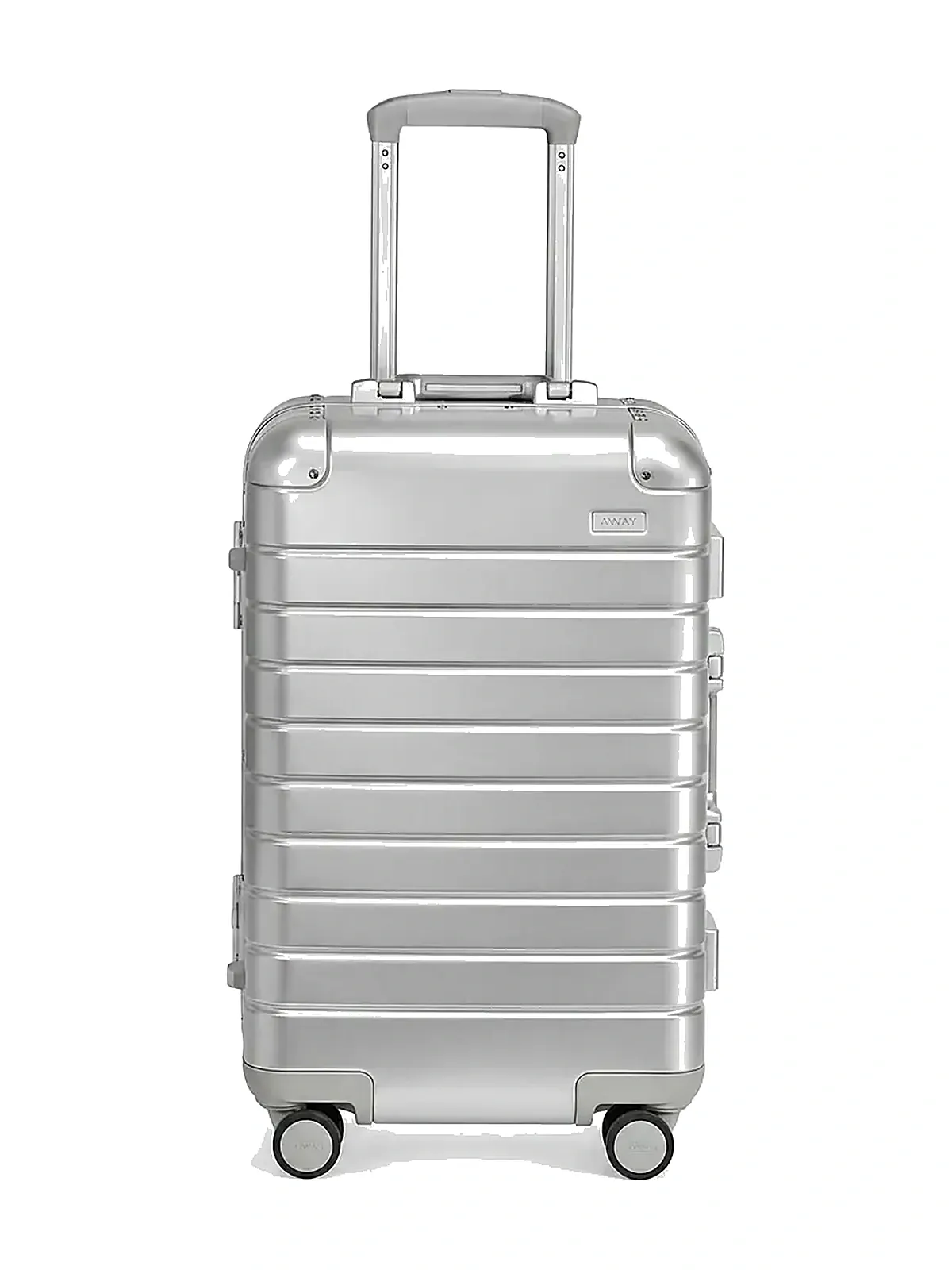
Away built the modern direct to consumer luggage category and The Bigger Carry On is still the reason. At $295 it holds 49 litres against roughly 37 litres in the Rimowa Essential Cabin, which is close to twelve extra litres for $695 less. In practice that is two more pairs of shoes and a second jacket. For a seven night trip where you refuse to check a bag, nothing else here comes close on usable volume.
The compression system is the underrated part. Away fits a nylon compression panel with two clips rather than a token strap, and it flattens a packed side enough to close the case without kneeling on it. The interior includes a laundry bag that people actually use, and the shell comes in matte finishes that hide handling marks better than gloss. Weight is 3.6 kg, which is respectable for the volume.
The compromises are real. The polycarbonate is thinner than the Tumi or the Rimowa and it scuffs early. Mine picked up a permanent grey stripe along the bottom edge within about fifteen flights and no amount of polish has removed it. The wheels are good rather than excellent, with more roll noise on hard tile than the Hinomoto units on the Monos. The Bigger Carry On also exceeds the sizer on some European carriers, which is worth knowing before you commit.
What Away gets right beyond the product is service. The limited lifetime warranty covers the shell, wheels, handle and zips, and the North American store network means a broken wheel can be sorted in person rather than by courier. That matters more than a spec sheet when something fails two days before a trip.
The most luggage per dollar in this comparison. Buy it if capacity is the priority and you accept cosmetic wear as the cost of that.
The most usable capacity per dollar and the widest service network in the United States, with a shell that scuffs early.
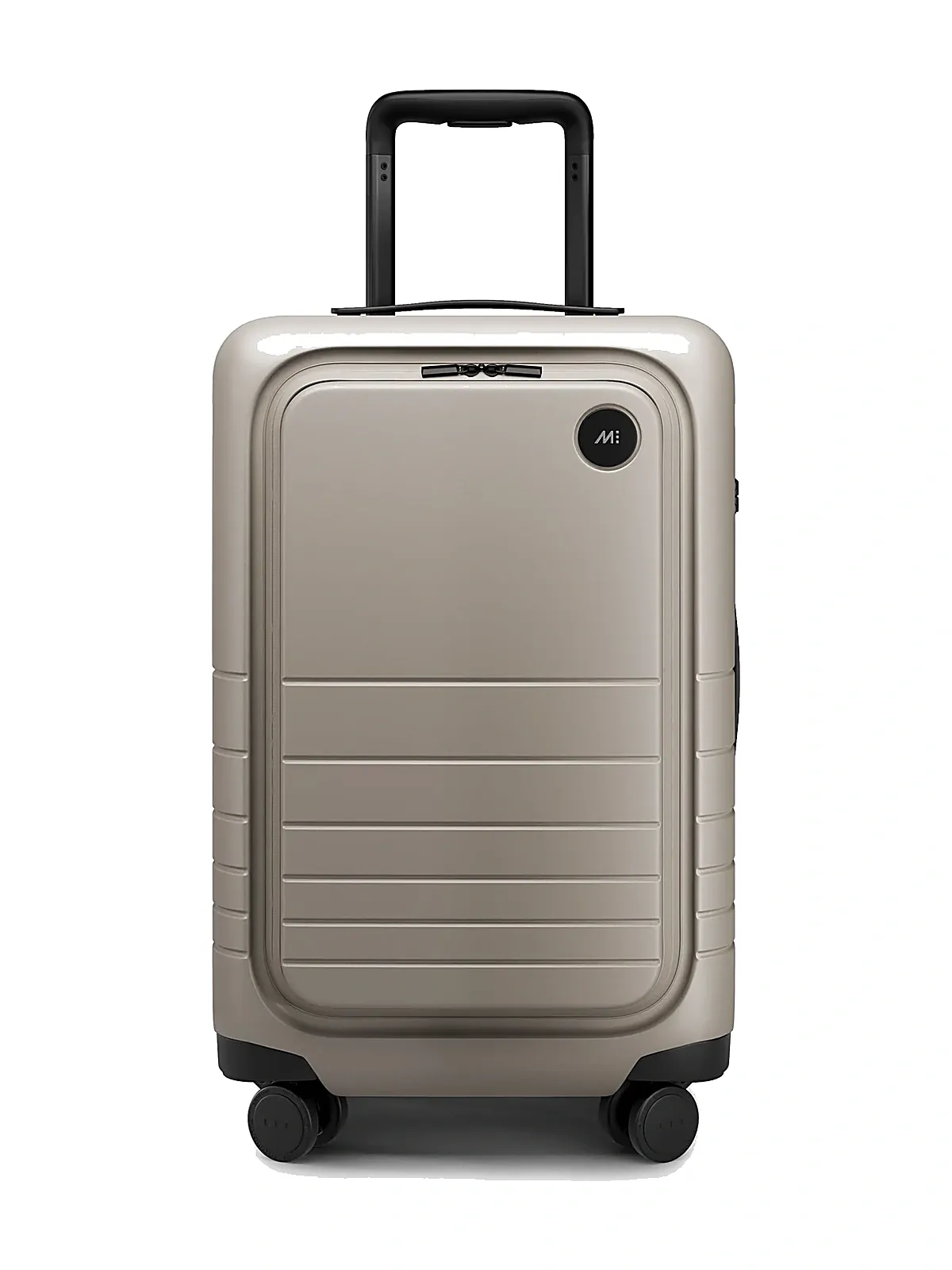
The Monos is the case I recommend most often and the one people are most surprised by when they learn the price. At $295 it uses a Makrolon polycarbonate shell in a matte finish that resists fingerprints, Hinomoto Lisof wheels that are the same Japanese units specified on cases costing three times as much, and a lifetime warranty that covers the parts that break rather than only manufacturing defects.
The Pro designation means the front compartment, and it is the single most useful feature on any case here. A laptop, passport, cable pouch and a book slide into a padded pocket on the outside of the shell, so security screening takes about eight seconds and you never open the main case on a terminal floor. Once you have travelled with that, going back to a plain shell feels like a downgrade.
At 3.5 kg empty it is 0.3 kg heavier than the Rimowa and it fits the 55 x 40 x 20 cm European sizer with the front compartment loaded. What you give up is refinement in the details. The telescopic handle has slightly more play than the Rimowa, the interior lining is plainer than the Tumi, and the brand carries none of the lobby signalling that a grooved aluminium case does. None of that affects whether your clothes arrive intact.
The value winner of 2026 and the case to buy if this is your only one. See where it sits in my full luxury suitcase rankings.
The value pick of 2026. Hinomoto wheels, a lifetime warranty and a front laptop compartment for a third of the Rimowa price.
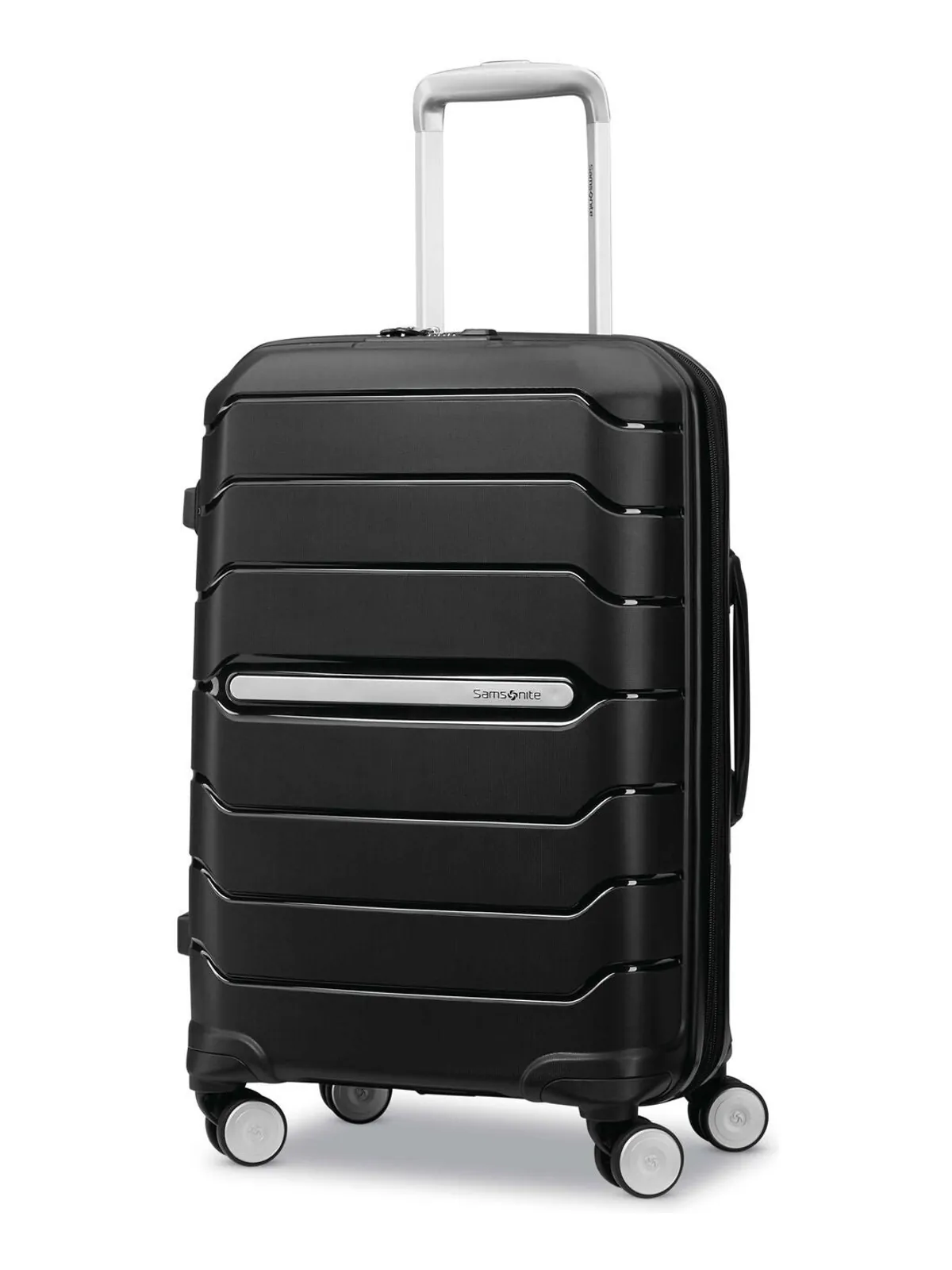
The Freeform is the unglamorous answer and it wins one argument outright. At 3.0 kg it is the lightest case in this comparison, and on any airline with a 7 kg cabin allowance that difference is 1.3 kg of clothes you get to bring rather than leave behind. Qantas, Jetstar, Scoot, Cebu Pacific and a long list of Asian carriers weigh cabin bags at the gate. The Rimowa loses that fight before you pack.
Samsonite builds the Freeform from a moulded polycarbonate shell with rounded corners, and the shape is more forgiving in an overhead bin than the squared profiles above. The interior is basic, the zips are lighter gauge, and the wheels are the weakest here on rough pavement. The warranty runs ten years limited, which is generous for the price but not the lifetime cover Monos and Away offer.
Buy this if the case is a means of transport rather than an object you care about. Buy it also as a second case for trips where you know the airline weighs bags, which is how most frequent flyers I know actually use it. It costs $154, down from a $220 list price, and nothing here beats it on grams per dollar.
The pragmatist's carry on. Lightest, cheapest, least interesting, and the right answer for 7 kg cabin limits.
The lightest case here at 3.0 kg, which matters more than anything else on a 7 kg cabin allowance.
Each answer uses only the prices, weights and capacities already verified on this page.
Four buyers, four different answers. Find the one closest to your year.
Only if you fly often enough to amortise it. The Essential Cabin costs $990 against $795 for the Tumi 19 Degree Expandable Carry-On and $295 for both the Away Bigger Carry On and the Monos Carry On Pro. At roughly 40 flights a year the Rimowa works out at about $25 a flight in the first year and almost nothing after that, because the shell outlasts everything else here. At four flights a year the same case costs about $248 a flight and a $295 Monos does the identical job.
Monos wins on value and Rimowa wins on longevity. The Monos Carry On Pro uses Makrolon polycarbonate, Hinomoto wheels and a lifetime warranty for $295, and in the hand it feels closer to a $600 case than a $300 one. The Rimowa Essential Cabin costs $990, weighs 3.2 kg against the Monos at 3.5 kg, and buys you a grooved shell that still looks correct after a decade plus a global repair network. If this is your only case and budget matters, buy the Monos.
Samsonite for value and weight, Rimowa for materials and resale. The Samsonite Freeform costs $154 and weighs 3.0 kg, which is the lightest case in this comparison and the easiest to lift into an overhead bin. The Rimowa Essential Cabin costs $990, weighs 3.2 kg and carries a lifetime guarantee on functional damage with repair centres in most major cities. Samsonite is the sensible purchase. Rimowa is the one you keep.
Yes on most airlines and no on the strictest. At 55 x 40 x 23 cm it clears the standard 56 x 45 x 25 cm allowance used by British Airways, Emirates, Singapore Airlines and most of Europe. It does not clear the 7 kg weight limit on Qantas, Jetstar and several Asian carriers once packed, because the empty case is already 3.2 kg. On those airlines the 3.0 kg Samsonite Freeform leaves a little more usable weight, while the 3.5 kg Monos leaves less.
Polycarbonate for almost everyone. Aluminium looks superb and takes damage without cracking, but it dents permanently, weighs roughly a kilogram more and costs two to three times as much. Polycarbonate flexes on impact and returns to shape, which is why the Away, Monos and Samsonite cases here still look presentable after heavy use. Choose aluminium only if you actively like the way scratches record where you have been.
I earn a small affiliate commission when you book through my outbound links to Booking.com and a handful of other partners, at no extra cost to you. No hotel, resort or brand can pay to be included in a ranking or moved up the list. I decide the order before I check any commercial arrangement, and no partner reads my copy before it goes live.
One case is built to survive a decade of terminals. The other does almost the same job for $695 less. Compare the wider market in the full ten case suitcase comparison, or see how the lighter cases stack up in Rimowa vs Samsonite.
Read the Monos verdict